Driveways That Handle Daily Traffic and Weather
Gravel Driveway Installation in Clarksville for Properties Needing Stable, All-Weather Access
Jones Rentals & Hauling installs gravel driveways in Clarksville using crushed stone and crush-and-run materials selected for the specific demands of your property. You need this service when your existing driveway develops ruts during wet weather, when grading equipment can't reach your property without surface preparation, or when you're establishing a new access route that must support vehicle weight year-round. The installation process includes base preparation, proper drainage angles, and material selection based on whether the surface will handle passenger vehicles, trucks, or heavy equipment.
The work involves grading the driveway path to establish drainage angles that direct water away from the surface, then layering materials that lock together under compaction to create a stable driving surface. Crushed stone for driveways provides angular edges that interlock when compacted, preventing the shifting and rutting that occurs with rounded river rock. Proper installation accounts for the clay-heavy soils common in Montgomery County, which retain water and require adequate base preparation to prevent the gravel from sinking into softened ground during spring rains.
Schedule a site evaluation to determine the grading requirements and material quantities for your driveway project.
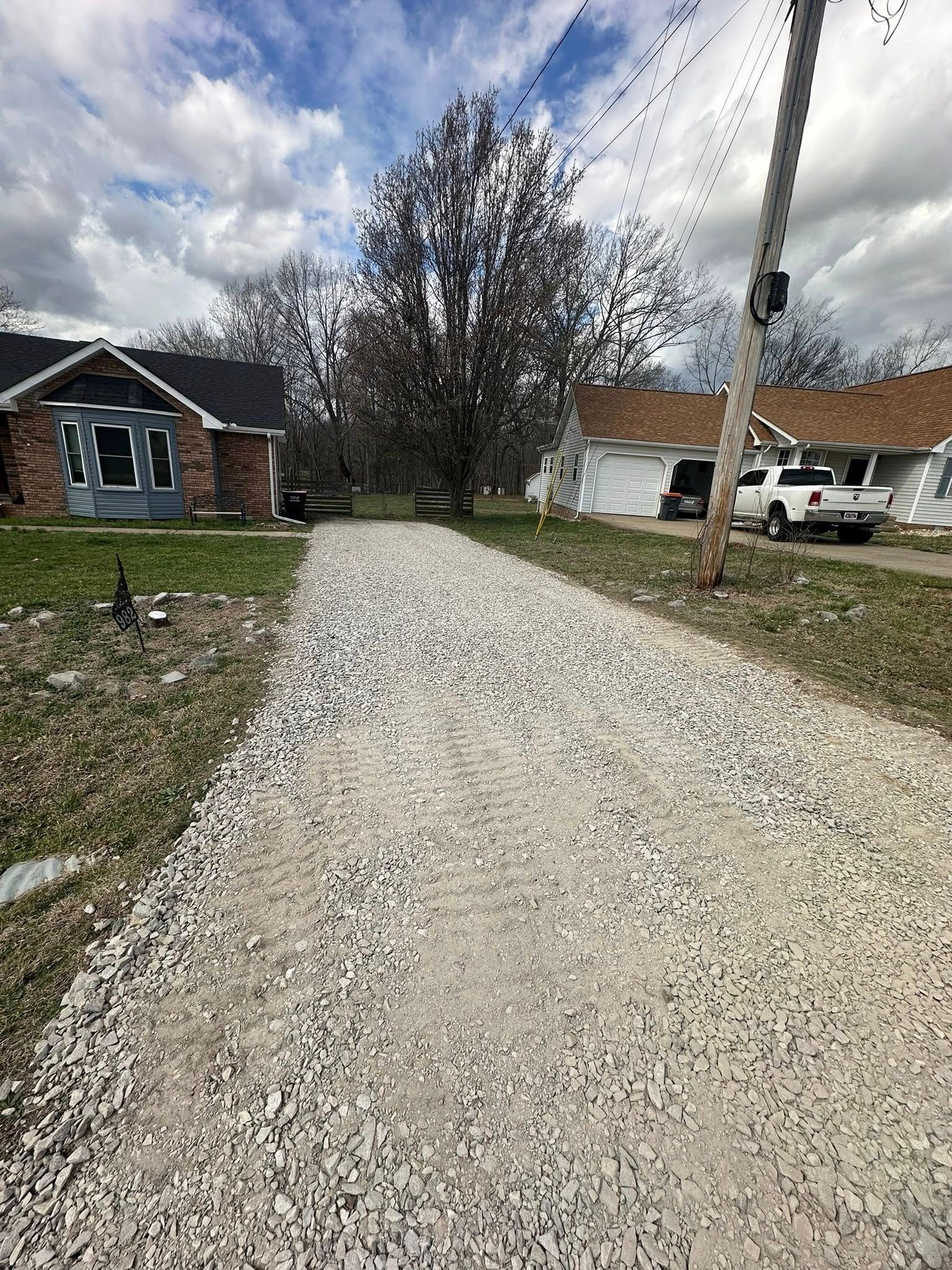
How Material Selection Changes Driveway Performance
The type of gravel used determines how the driveway responds to traffic, weather, and time. Crushed stone for driveways consists of angular fragments that compact tightly and resist displacement under tire pressure, making it suitable for primary access routes that see daily use. Crush-and-run, which combines larger stone with finer material, creates a dense surface that works well for parking pads where vehicles remain stationary rather than turning frequently. The #57 stone, a uniform one-inch aggregate, serves drainage applications along driveway edges where water needs to percolate quickly without carrying fines into culverts or ditches.
After installation, you'll notice the driveway sheds water instead of holding puddles, vehicles no longer create ruts during wet periods, and the surface remains firm enough to walk on without sinking into loose material. Jones Rentals & Hauling grades the base to create a crown that directs runoff toward the edges, preventing the standing water that accelerates erosion in ungraded installations. The compacted gravel surface provides traction in conditions where mud or wet grass would leave vehicles spinning.
Installation includes delivery of materials, grading to establish proper drainage slope, and spreading gravel to the depth required for the anticipated load. The initial surface settles during the first few weeks of use as vehicle weight compacts the stone; this is normal and results in a firmer, more stable driving surface. Properties with steep grades require different installation techniques than flat terrain, including cross-slope grading to prevent washout during heavy rain events common in this region during spring and fall.
Questions About Gravel Driveways and Material Choices
Property owners typically ask about material selection, installation depth, and how different gravel types perform under specific conditions.
What is the difference between crushed stone and crush-and-run for driveways?
Crushed stone consists of uniform angular fragments that provide a firm, interlocking surface ideal for driveways with frequent traffic and turning movements, while crush-and-run combines larger stone with finer material to create a denser, more compacted surface better suited for parking pads where vehicles remain stationary.
How deep does the gravel need to be for a residential driveway?
Installation depth depends on soil conditions and vehicle weight, but most residential driveways in Clarksville require four to six inches of compacted gravel over properly graded soil to prevent rutting during wet weather and support daily passenger vehicle use.
When should I use #57 stone instead of crushed stone?
#57 stone works best for drainage applications along driveway edges, around culvert inlets, or in areas where water needs to move quickly through the material rather than across the surface, since the uniform one-inch size creates void spaces that allow rapid percolation.
How does clay soil affect gravel driveway installation?
Clay soil retains moisture and softens during wet periods, which means the base must be graded to prevent water accumulation beneath the gravel layer, and installation may require geotextile fabric in areas with poor drainage to keep the gravel from sinking into saturated clay.
What maintenance does a gravel driveway require after installation?
The surface may need occasional regrading to smooth out areas where vehicle turning displaces material, and adding a thin layer of fresh gravel every few years restores the crown and replaces stone that has been pressed into the base layer through compaction.
Jones Rentals & Hauling delivers gravel and completes installations throughout Clarksville and surrounding service areas in Montgomery County. Contact the company to discuss material options and schedule delivery based on your driveway dimensions and soil conditions.